
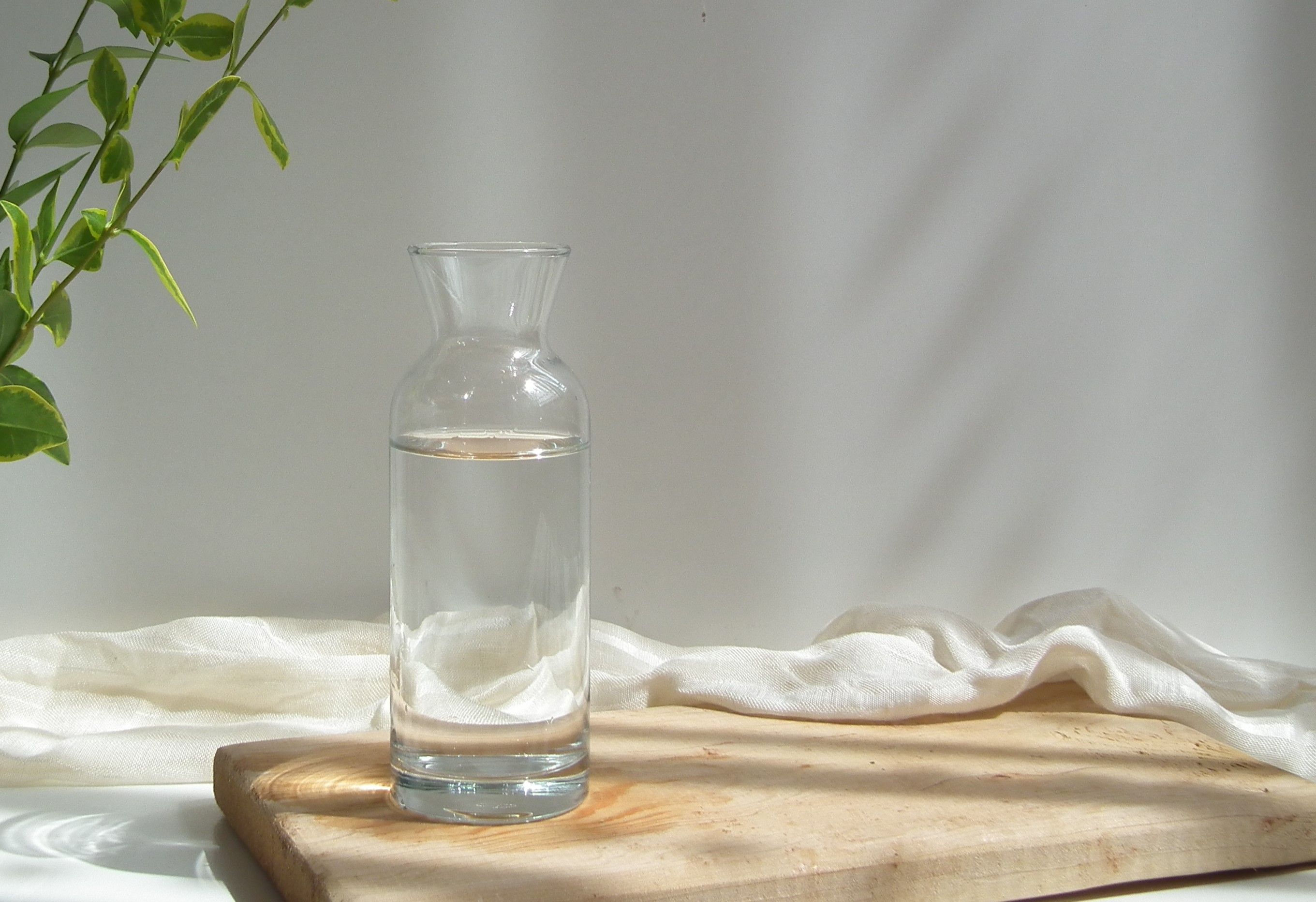
Brain Fog? Before You Blame Your Hormones, Check Your Water
Why even mild dehydration can make everything feel harder – and how to find a hydration habit that actually works for you.
Brain fog? Poor concentration? That familiar 3pm moment when composing a perfectly ordinary email suddenly requires enormous mental effort?
Before you blame your hormones, cortisol or age, here’s a rather less exciting possibility:
Have you actually had enough to drink today?
We spend an extraordinary amount of time thinking about what we eat, which supplements to take and how to optimise our health. Yet one of the simplest things we can do for our wellbeing is surprisingly easy to overlook.
Hydration.
Not particularly glamorous, I know. But the science is more interesting than you might think.
Your brain may be working perfectly well. It just feels harder.
I recently came across some fascinating research looking at the effects of mild dehydration on the brain.
In one study, healthy young women who became mildly dehydrated – losing around 1.4% of their body weight through fluid loss – reported greater fatigue, headaches, difficulty concentrating and a feeling that mental tasks required more effort.
Here’s the interesting part.
Their actual performance on most cognitive tests hadn’t changed significantly.
In other words, their brains could still do the job. It just felt like much harder work.
Now, this doesn’t mean every afternoon slump is caused by dehydration. And research into hydration and cognitive performance is mixed, particularly when dehydration is mild.
But it does suggest something worth remembering: how efficiently we think and how mentally energetic we feel aren’t always quite the same thing.
Sometimes, before looking for a complicated explanation, it’s worth checking something very basic.
Why does hydration matter to the brain?
Water is essential for maintaining blood volume, transporting nutrients, regulating body temperature and supporting normal cellular function.
Our brains are particularly sensitive to changes in the body’s internal environment.
When fluid levels fall, the body has to work harder to maintain its usual balance. Even relatively small changes may affect how we feel, including our mood, energy and perception of mental effort.
You may also have heard about the glymphatic system, the brain’s waste-clearance system, which uses fluid movement to help remove metabolic by-products.
It’s an exciting area of research, particularly in relation to sleep and brain health.
But let’s keep things in perspective. Although water is essential to normal brain function, we don’t currently have convincing evidence that simply drinking more water improves glymphatic clearance or prevents Alzheimer’s disease.
So no, another litre of water isn’t going to make you a genius.
But making sure you’re adequately hydrated is a sensible foundation for keeping your brain – and the rest of you – functioning well.
So how much water do we actually need?
You’ve probably heard the advice to drink two litres of water every day.
But here’s an important distinction.
The European Food Safety Authority (EFSA) recommends approximately:
- 2 litres of total water per day for adult women
- 2.5 litres of total water per day for adult men
And total water means water from both food and drinks.
As roughly 20% of our water intake may come from food, that translates to around 1.6 litres of drinks for women and 2 litres for men as a broad starting point.
And yes, your tea and coffee count.
So do soups, yoghurt, fruit and vegetables.
Naturally, your needs will vary depending on the weather, physical activity, age and individual circumstances. Pregnancy, breastfeeding and illness can also increase fluid requirements.
The point isn’t to obsess over every millilitre. It’s to make drinking enough part of your everyday routine.
Find the hydration trick that works for you
Knowing you should drink more water is easy. Remembering to do it is another matter.
And just like nutrition, I don’t believe there’s one perfect approach that works for everyone.
The secret is to find a method that fits how you naturally behave.
If you like a target
This is my personal favourite. I have a 500 ml water bottle and aim to finish it three times during the day.
For me, that’s much easier than thinking about two litres of water. Add in my other drinks and the water from food, and I’m comfortably on my way.
If you forget to drink
Attach drinking water to something you already do.
A glass when you make your morning coffee, another when you sit down for lunch, one with your afternoon tea.
Think of it as habit stacking, without needing another reminder on your phone.
If you work at a desk
Put a carafe or bottle somewhere you can actually see it.
Not tucked away in your bag or on the other side of the office.
You might decide to finish one bottle before lunch and another during the afternoon. A visible prompt can make all the difference.
If you don’t particularly like water
Don’t force yourself to drink endless glasses of something you don’t enjoy.
Try sparkling water, herbal teas, hot water with lemon, or water flavoured with mint, cucumber or berries.
There’s no special virtue in drinking plain water if you can meet your needs through other suitable drinks.
If you’re always on the go
Make your water bottle part of your leaving-the-house routine.
Keys. Phone. Water.
Choose a bottle that’s genuinely practical to carry. The beautiful, enormous bottle that spends all day at home isn’t terribly useful.
If you love a routine
Create three hydration moments: morning, lunchtime and afternoon.
A 500 ml bottle or carafe at each makes it easy to keep track without logging anything.
If you get bored easily
Change things around.
Still water in the morning, sparkling with lunch, herbal tea in the afternoon.
Even a change of glass can make drinking water more appealing.
The point isn’t to find the perfect hydration routine.
It’s to find the one that makes drinking enough almost automatic.
How do you know if you’re drinking enough?
Thirst is a useful guide, but it’s not always the whole story, particularly as we get older.
Urine colour can offer another indication. Pale straw-coloured urine generally suggests adequate hydration, while consistently dark urine may be a sign that you’re not drinking enough.
Of course, some foods, supplements and medications can affect urine colour, so it isn’t a perfect measure.
And remember, more isn’t always better. Drinking excessive quantities of water can be harmful, particularly if it disrupts the body’s sodium balance.
If you have kidney or heart conditions, or have been advised to restrict fluids, your requirements may be different.
As with most things in health, balance matters.
Before you try to optimise everything, check the foundations
I find it fascinating how readily we look for complicated explanations when we don’t feel our best.
We worry about our hormones, our cortisol, our gut microbiome or whether we’re taking the right supplements.
Sometimes those things really do deserve attention.
But sometimes it’s worth looking at the foundations first.
Sleep. Food. Movement. Stress. Daylight. Hydration.
Not very glamorous, perhaps. But all important.
And this is something I come back to frequently in my work as a Nutritional Therapist and Functional Medicine Practitioner.
Good health isn’t about doing everything. It’s about understanding what your body needs and finding an approach that works for you.
So here’s my suggestion.
For the next few days, pay a little more attention to your hydration. Try one of the techniques above and see whether it makes a difference to how you feel.
You might be surprised.
And if you’re still struggling with fatigue, brain fog or poor concentration, don’t assume it’s simply dehydration. Persistent symptoms deserve a closer look.
Feeling that something isn’t quite right?
If you’re experiencing persistent tiredness, brain fog or other symptoms that you can’t quite make sense of, I can help you explore the wider picture.
My approach combines personalised nutrition, functional medicine and health coaching to help you understand what may be contributing to how you feel and identify practical, sustainable changes.
Book a complimentary 30-minute Health Transformation Call and let’s talk about where to begin.
Registered Nutritional Therapist | Functional Medicine Practitioner | Health Coach
Tracey Darrousez
Nutrition Naturally – Paris & Online
References & Further Reading
- Armstrong LE, et al. (2012). Mild dehydration affects mood in healthy young women. The Journal of Nutrition, 142(2), 382–388. https://doi.org/10.3945/jn.111.142000
- Wittbrodt MT, Millard-Stafford M. (2018). Dehydration impairs cognitive performance: A meta-analysis. Medicine & Science in Sports & Exercise, 50(11), 2360–2368. https://doi.org/10.1249/MSS.0000000000001682
- European Food Safety Authority (EFSA). (2010). Scientific Opinion on Dietary Reference Values for Water. EFSA Journal, 8(3), 1459. https://doi.org/10.2903/j.efsa.2010.1459
Leave a Reply